
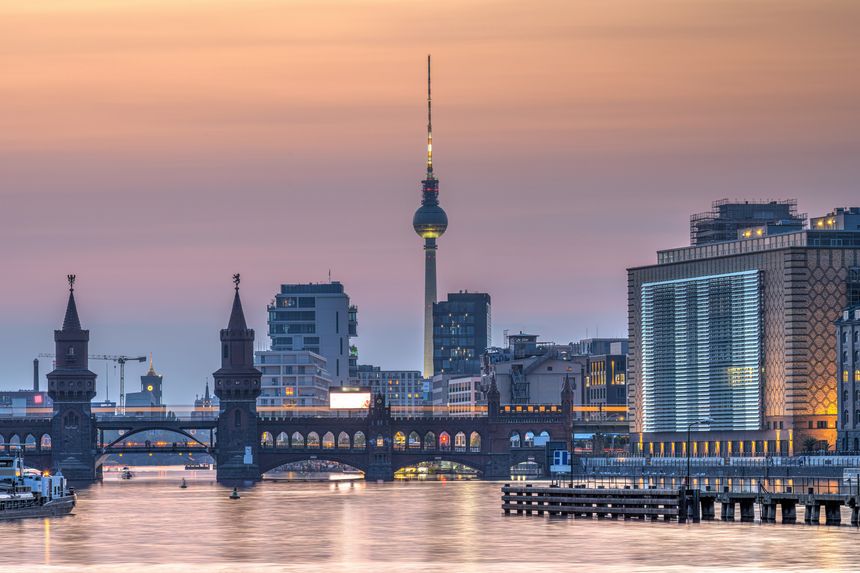

The Infrastructure Investor Global Summit returned to Berlin this year with a four-day programme spanning energy transition, digital infrastructure, geopolitics and the evolving definition of infrastructure itself. Across the Summit, a number of clear themes emerged that are likely to shape capital allocation decisions across the sector in the years ahead.
AI and data centres: opportunity and complexity
Artificial intelligence is no longer treated as a speculative technology, it is now firmly embedded in infrastructure thinking. Sentiment at the Summit was clear: AI is not a bubble and the demand drivers underpinning digital infrastructure were described as astronomical. The impact of AI spans the entire infrastructure portfolio, from power generation and transmission through to data centre-specific allocations and connectivity assets such as fibre and towers.
Enthusiasm is, however, tempered by a recognition that some elements of risk in this sector are potentially under-priced. Obsolescence and end-user credit risk were highlighted as risks that the market may have yet to fully account for. There is a recognised long-term pricing risk as the current imbalance between supply and demand is likely to eventually narrow.
The energy transition and Europe's position
Despite an unsettled geopolitical environment, there is a broadly positive view of Europe's position within the global energy transition. Europe (including the UK) is seen as well interconnected, with diverse energy markets and growing investment in midstream flexibility. Energy transition is also increasingly understood as a direct response to energy security risk, elevating its strategic importance beyond decarbonisation objectives alone.
Grid infrastructure: financing the gap
Transmission and grid-connected assets emerged as an area of particular investor interest across the Summit. The challenge of investing in grid infrastructure from a regulatory perspective was a recurring point of discussion, with participants noting that innovative financing solutions such as bridge partnerships, ancillary service revenues and bespoke projects, such as substation development, can provide workable solutions where direct regulatory routes remain difficult.
The regulated asset base model was identified as having been effective in attracting capital through predictable cash flows but questions were raised as to whether it needs to evolve further given the scale and pace of investment now required. TOTEX models (which combine CAPEX and OPEX into a single, unified allowance) were cited as an attractive alternative.
In the United States, the consensus was stark: the grid is not expected to be built through public investment alone, leading investors to focus instead on co-location strategies and new power assets, with renewables preferred over gas on a risk-return basis particularly given the supply chain delays on CCGT equipment.
Batteries and storage: moving from planning to delivery
Battery storage was among the most actively discussed asset classes at the Summit. The shift in focus from planning to delivery was noted as a significant development, although grid connection and build out timelines remain a constraint. Transmission system operators are increasingly receptive to battery solutions, given their ability to provide reliability, flexibility and ancillary services. These functions are understood now as critical as renewable penetration increases and load from data centres grows.
The sector's merchant exposure remains a barrier, however, for many institutional investors. The emerging consensus is that a hybrid approach can be workable with investors looking to the asset to contract out for a certain capacity but leave room in the revenue stack to be able to benefit from times of volatility.
Pumped hydro was highlighted as an underutilised and proven long-duration storage technology. It accounts for approximately 80% of all installed storage capacity globally.
The outlook for storage is broadly positive: tens of billions of capital are expected to be deployed in the sector over the next five to ten years and the financing and structuring tools required to support this are expected to develop accordingly.
Renewables: scale and the role of government
The renewable energy sector remains central to infrastructure investment. 2025 was a record year for wind deployment and those developers who have successfully weathered the previous period of market turbulence are now reporting positive momentum.
Government follow-through on Contracts for Difference commitments was identified as critical to sustaining this momentum, both in driving down the levelised cost of electricity and in underpinning investor willingness to deploy capital at scale into large projects.
Geopolitics and defence infrastructure: a shifting landscape
Geopolitical risk featured prominently across the Summit, with more open discussion emerging over the course of the four days regarding longer-term downside scenarios and the potential consequences of repeated supply shocks. Investors are not adjusting according to the daily news flow but they are alert to lagged effects such as the impact of inflation and interest rates, both on future investment and deployed capital.
One of the more notable shifts in sentiment relates to defence and resilience infrastructure, which has moved from a niche consideration to a central theme for this year’s Summit. There is growing recognition of the strategic imperative for private capital to participate in this space. Policy backing and a developing pipeline for defence assets are emerging and there is an observable mindset shift within the institutional investment community that investment in defence and resilience assets is becoming more broadly acceptable. Established financing structures, including long-term concessions and regulated asset base models are seen as workable, though the emphasis from investors is on developing the pipeline of investable opportunities rather than on any particular financing model. The pace of attacks on all types of infrastructure assets globally was noted as a concern, with calls for more active asset protection measures.
Circularity and sustainability: building for the long term
A recurring theme across the Summit was the importance of circularity to the long-term sustainability of the energy transition. Investors are increasingly expected to consider not only the deployment of new assets but also how those assets are built, maintained and ultimately decommissioned. Failure to do so risks creating stranded assets and exposing portfolios to rising material costs as supply chains for key inputs tighten.
First-generation wind farms are now reaching end of life, bringing into focus the challenge of blade waste, which is a problem expected to grow significantly over time. Wind turbine blades are constructed from composite materials including wood, fibreglass and plastics, which are inherently difficult to separate and recycle.
Repowering was highlighted as a compelling response to these challenges. By replacing older turbines with newer technology on existing sites, operators can halve the number of turbines whilst potentially doubling power output. The advantages are significant in that no new land is required, permitting processes are materially easier given established site histories and community relationships are already in place. Repowering is increasingly viewed as a practical illustration of circularity in action within the infrastructure sector.
Supply chain: managing risk in a complex environment
As the definition of infrastructure continues to expand, more investors are actively seeking greenfield exposure across a broader range of asset classes. This trend brings with it heightened supply chain risk, a challenge that featured prominently in Summit discussions but one that participants broadly characterised as solvable with the right approach.
A range of practical mitigation strategies were discussed. These include diversification of supply sources, contractual protections that allocate risk to the party best placed to address it (a matter of some negotiation, of course) and ensuring that contractors maintain contingency plans so that work can continue in the event of delays to specific components. Investors are also encouraging developers to procure materials ahead of schedule where possible, to repurpose existing equipment and to plan proactively for regulatory changes in order to absorb potential shocks. Identifying the right local partners and ensuring that developers have sufficient scale and leverage over suppliers were cited as further critical success factors.
Redundancy in asset design and operations was identified as an area requiring greater focus. Investors want assurance that assets can be kept online, with robust back-up arrangements and clear frameworks for assessing and managing downtime risk. Long lead times for key equipment remain a persistent concern across multiple asset classes.
On tariffs, the discussion is evolving rapidly. Questions around who bears tariff risk, what proportion of that risk sits with each party and what happens when tariffs are removed, including whether amounts already paid can be clawed back, are all novel issues that the market is still working through. Equity commitments in the current environment require careful structuring to account for these uncertainties.
The prevailing view is that, whilst tariff disruption and supply chain friction will create near-term volatility, these dynamics will ultimately accelerate the energy transition by incentivising domestic production, supply chain resilience and greater self-sufficiency. The road, however, is expected to be a bumpy one.
/Passle/5f6c57568cb62a0d7c9eadee/SearchServiceImages/2026-01-28-14-47-21-400-697a2179e8715be98458d80a.jpg)
/Passle/5f6c57568cb62a0d7c9eadee/SearchServiceImages/2026-10-14-16-16-11-827-6acfaacb91778041f006e65e.jpg)
/Passle/5f6c57568cb62a0d7c9eadee/SearchServiceImages/2026-10-14-15-30-30-167-6acfa016944aac193a994afc.jpg)
/Passle/5f6c57568cb62a0d7c9eadee/SearchServiceImages/2026-10-14-09-33-36-235-6acf4c705707bcf1c6b13a67.jpg)
/Passle/5f6c57568cb62a0d7c9eadee/SearchServiceImages/2026-10-13-08-59-22-329-6acdf2ea5011758bb0c13707.jpg)